> ## Documentation Index
> Fetch the complete documentation index at: https://docs.beeswarm.app/llms.txt
> Use this file to discover all available pages before exploring further.
# Our History
> How BeeSwarm was born and evolved into the ecosystem it is today
 # Our History
 ## The starting point: BeeSwarm Pay
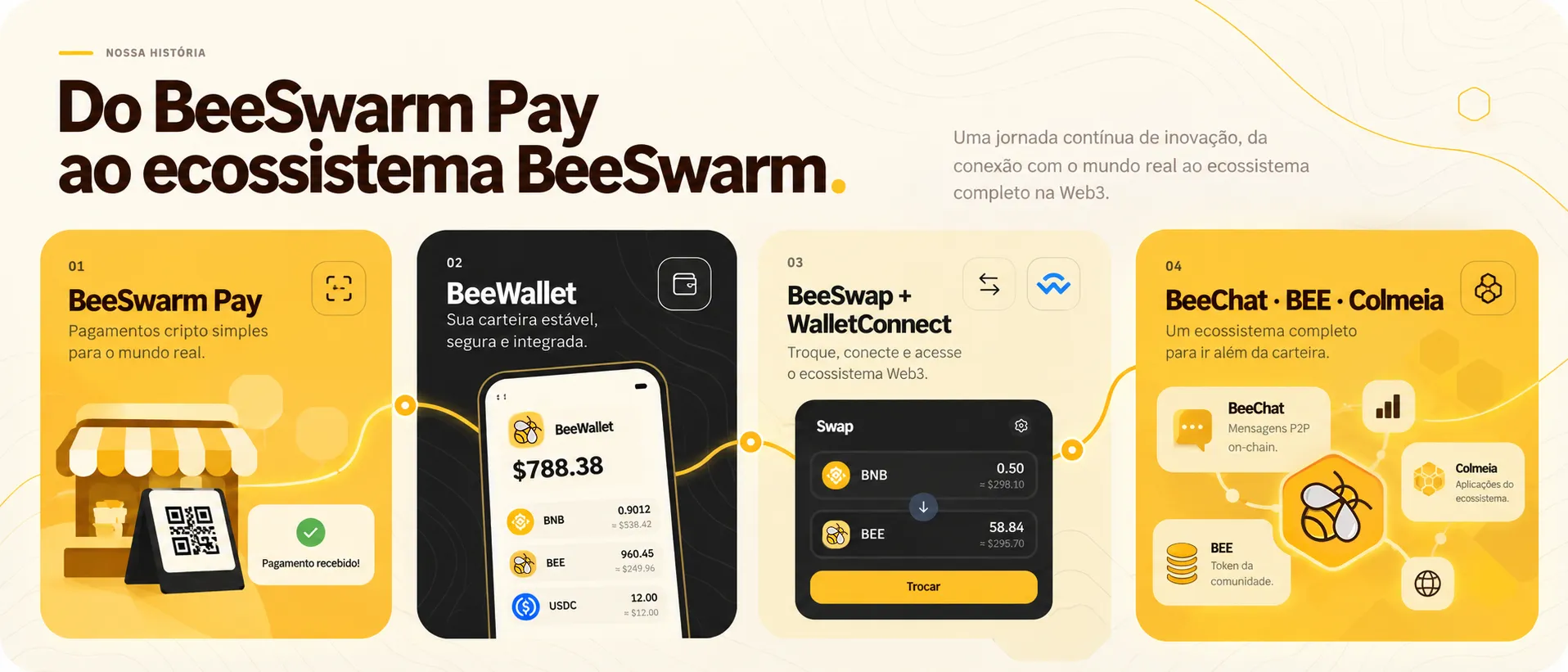
It all started with a real problem faced by merchants and businesses: accepting cryptocurrency was complicated. The security of crypto, when handled legitimately, is something extraordinary — but the path to get there had too much friction.
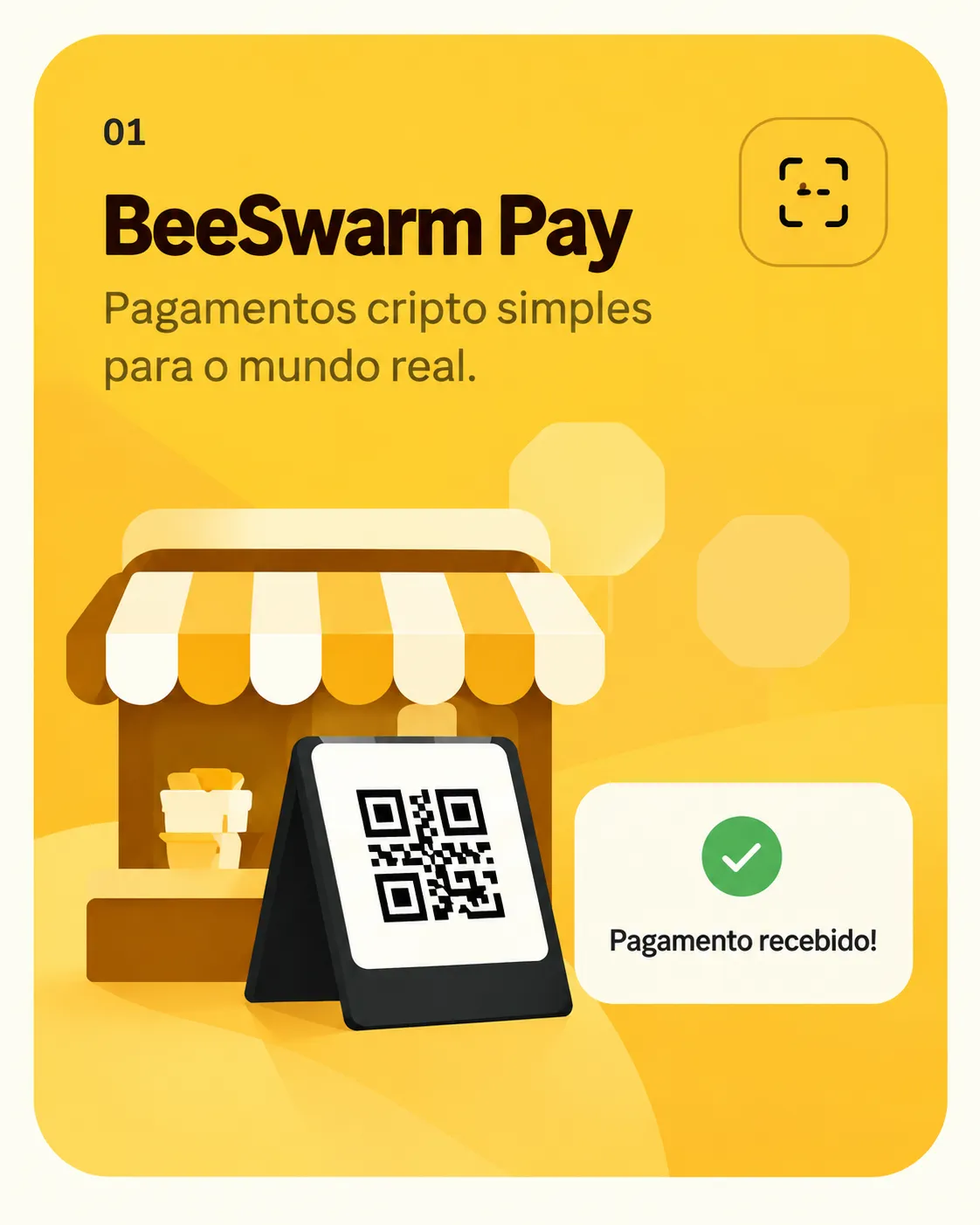
That's how we created **BeeSwarm Pay**. The merchant would sign up, paste their external wallet's public address into the app, and start receiving crypto. Simple in concept — but still dependent on a third-party wallet to work. The user needed two apps: ours, and an external wallet just to generate a public address.
That friction was the problem. And it led us to the next step.
## The starting point: BeeSwarm Pay
It all started with a real problem faced by merchants and businesses: accepting cryptocurrency was complicated. The security of crypto, when handled legitimately, is something extraordinary — but the path to get there had too much friction.
That's how we created **BeeSwarm Pay**. The merchant would sign up, paste their external wallet's public address into the app, and start receiving crypto. Simple in concept — but still dependent on a third-party wallet to work. The user needed two apps: ours, and an external wallet just to generate a public address.
That friction was the problem. And it led us to the next step.
 ## The wallet that doesn't change under your feet
Most crypto wallets we used had a silent problem: **interface instability**. One week the buttons were at the top, the next they were at the bottom. Menus migrated to different sides. What was intuitive in one version became confusing in the next. And there were always users asking what had changed.
But the constant change wasn't the only problem. Important features — exporting a private key, accessing critical settings — were buried in non-obvious menus. You had to search Google to find what should have been right at hand.
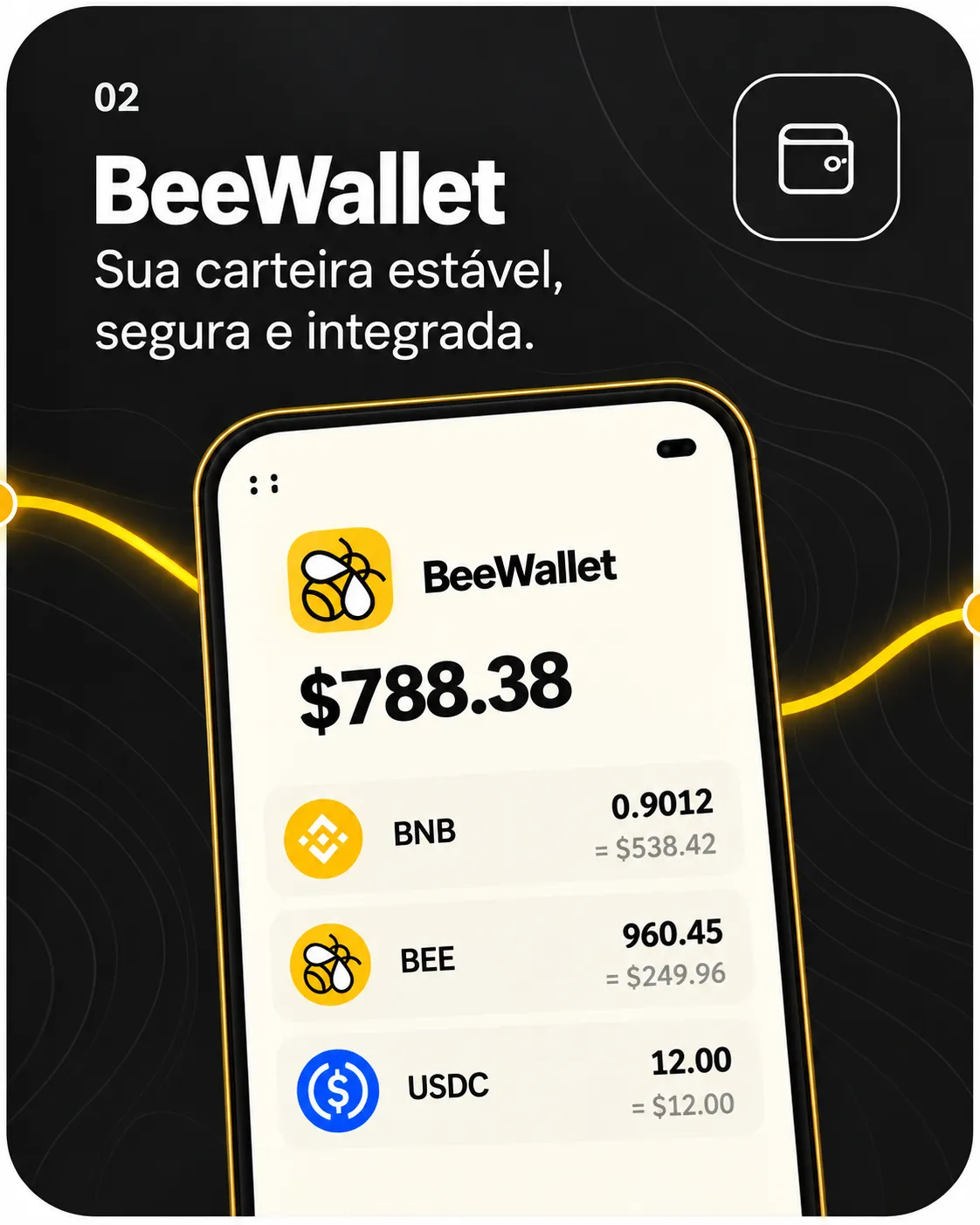
**BeeSwarm Wallet** was born against that tide. Two core rules guided its construction:
* Never move important access points
* Never hide vital features
A fixed layout isn't a limitation — it's respect for the user who already learned where things are.
With the wallet built into the app, we eliminated the external dependency. The merchant now had everything in one place.
## The wallet that doesn't change under your feet
Most crypto wallets we used had a silent problem: **interface instability**. One week the buttons were at the top, the next they were at the bottom. Menus migrated to different sides. What was intuitive in one version became confusing in the next. And there were always users asking what had changed.
But the constant change wasn't the only problem. Important features — exporting a private key, accessing critical settings — were buried in non-obvious menus. You had to search Google to find what should have been right at hand.
**BeeSwarm Wallet** was born against that tide. Two core rules guided its construction:
* Never move important access points
* Never hide vital features
A fixed layout isn't a limitation — it's respect for the user who already learned where things are.
With the wallet built into the app, we eliminated the external dependency. The merchant now had everything in one place.
 ## The wallet becomes the core
Over time, it became clear: users would open BeeSwarm Pay and go straight to the wallet. Usage patterns spoke for themselves.
It made sense, then, to reorganize the app — not as an interface change for its own sake, but as an honest reflection of how people were already using the product. The wallet became the main screen; BeeSwarm Pay remained accessible via the tools menu.
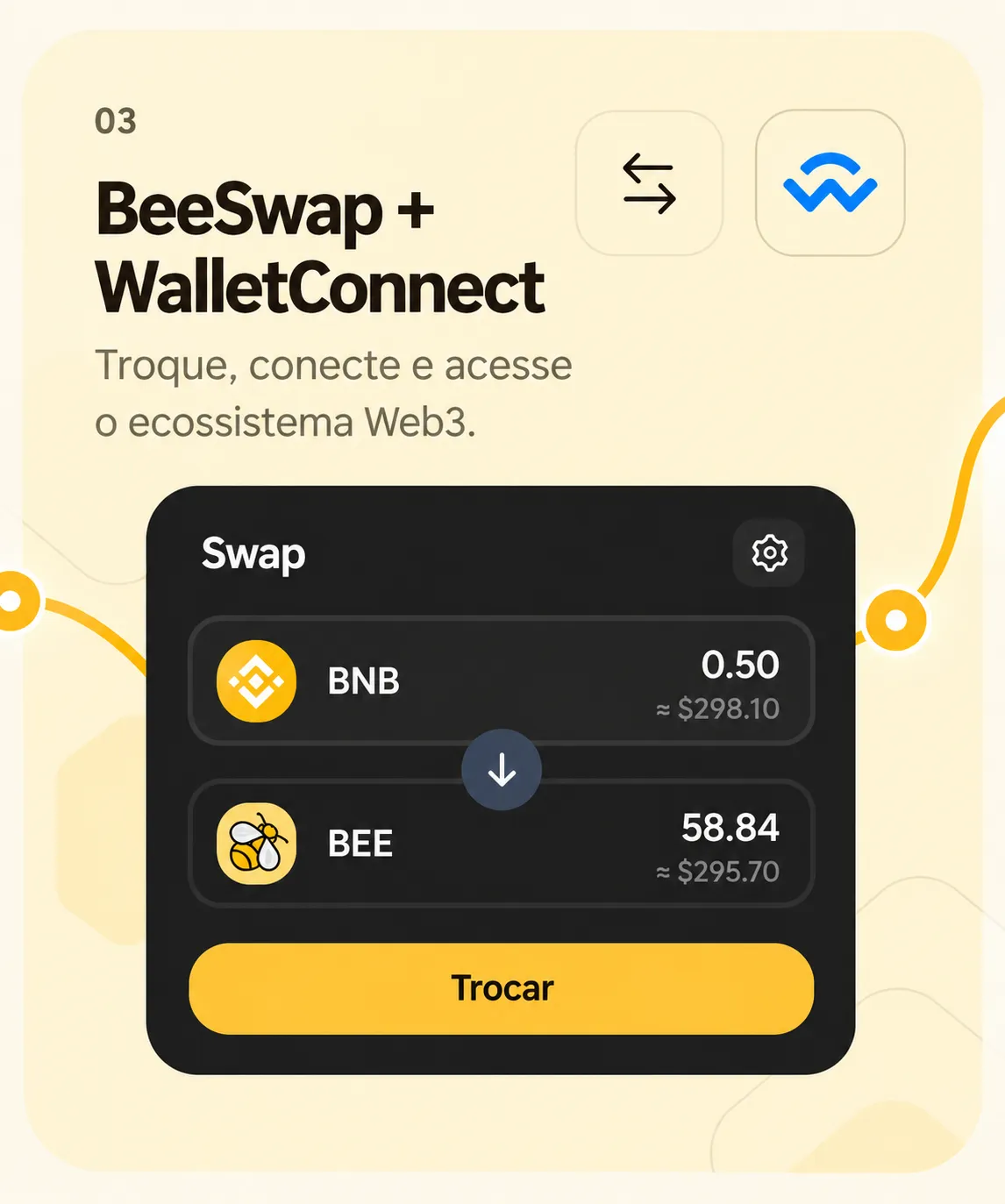
From there, everything began to revolve around the wallet. New features were added: token transfers, built-in swap, and integration with **WalletConnect** — our first official listing as a wallet on the protocol, accessible across all dApps through the WalletConnect modal.
## The wallet becomes the core
Over time, it became clear: users would open BeeSwarm Pay and go straight to the wallet. Usage patterns spoke for themselves.
It made sense, then, to reorganize the app — not as an interface change for its own sake, but as an honest reflection of how people were already using the product. The wallet became the main screen; BeeSwarm Pay remained accessible via the tools menu.
From there, everything began to revolve around the wallet. New features were added: token transfers, built-in swap, and integration with **WalletConnect** — our first official listing as a wallet on the protocol, accessible across all dApps through the WalletConnect modal.
 ## The ecosystem expands
With a solid wallet as its foundation, the ecosystem grew naturally.
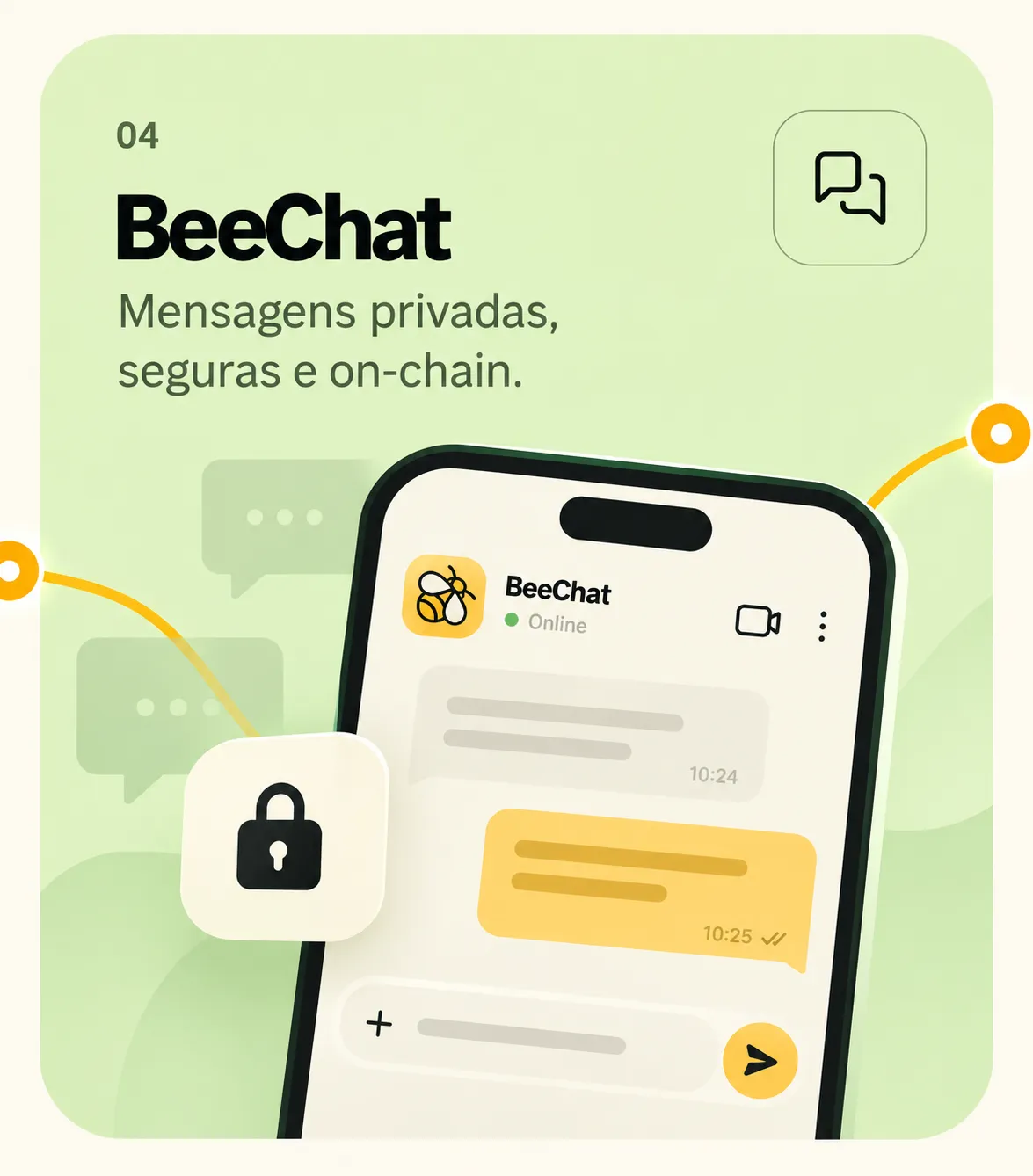
**BeeChat** arrived: a P2P chat with local encryption, managed 100% by smart contracts, with no centralized servers. We then integrated third-party gateways for purchasing crypto directly within the app.
In August 2026, we launched **BEE** — our first official token. With it, we created the **Swarm** mechanism: a system built into the wallet, operated by smart contracts, that triggers automatic micro-purchases of BEE at regular intervals and rewards users with token percentages and other exclusive benefits.
***
The BeeSwarm of today is the direct result of every problem we encountered, every friction we refused to accept.
Built by [Tolvai Company LLC](/en/about/tolvai), with the mission of simplifying access to the extraordinary tools of Web3.
This documentation is built and hosted on [Mintlify](https://mintlify.com), a developer documentation platform.
## The ecosystem expands
With a solid wallet as its foundation, the ecosystem grew naturally.
**BeeChat** arrived: a P2P chat with local encryption, managed 100% by smart contracts, with no centralized servers. We then integrated third-party gateways for purchasing crypto directly within the app.
In August 2026, we launched **BEE** — our first official token. With it, we created the **Swarm** mechanism: a system built into the wallet, operated by smart contracts, that triggers automatic micro-purchases of BEE at regular intervals and rewards users with token percentages and other exclusive benefits.
***
The BeeSwarm of today is the direct result of every problem we encountered, every friction we refused to accept.
Built by [Tolvai Company LLC](/en/about/tolvai), with the mission of simplifying access to the extraordinary tools of Web3.
This documentation is built and hosted on [Mintlify](https://mintlify.com), a developer documentation platform.